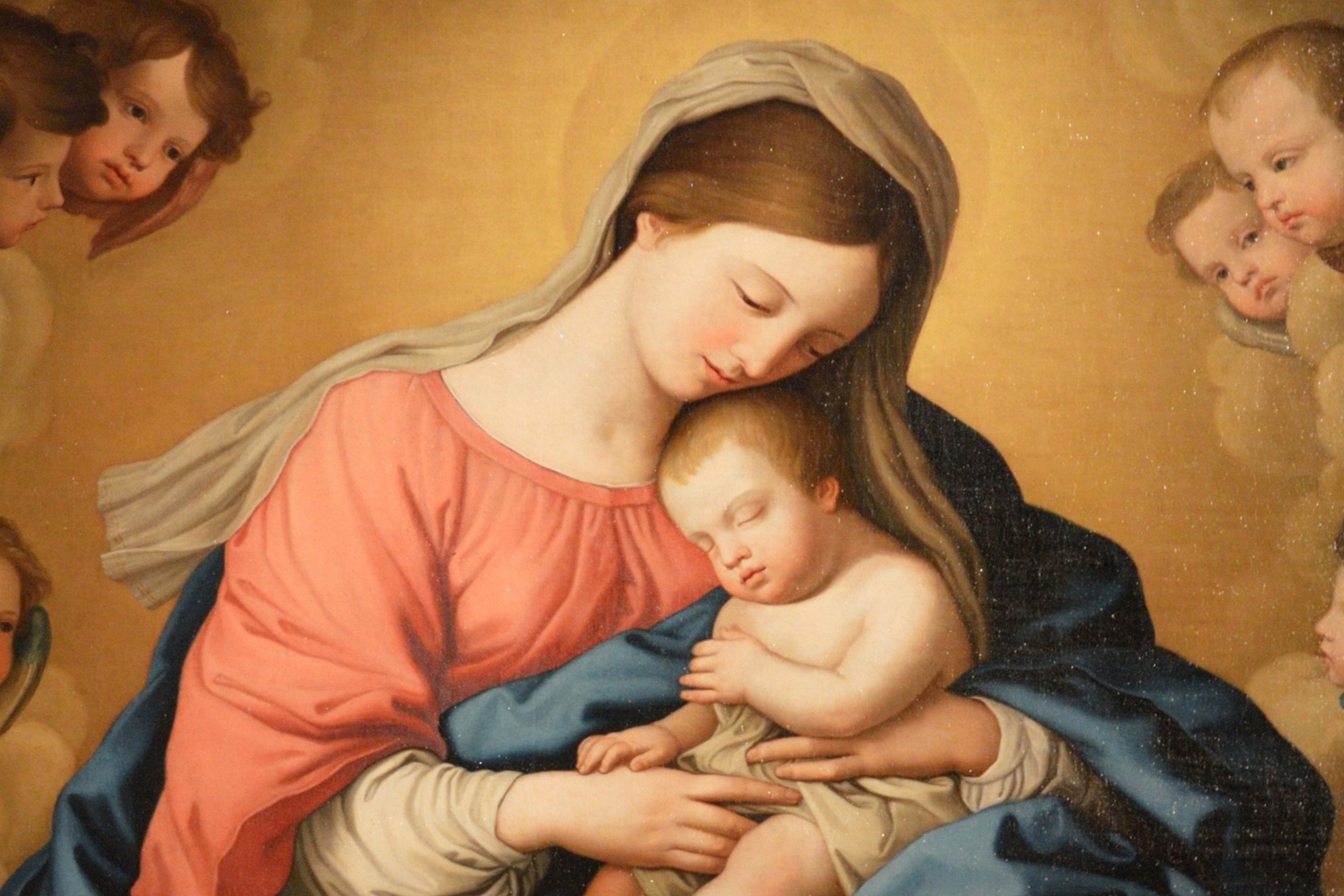
“The greatest event in the whole history of the world was the Incarnation of the eternal Word by whom the world was redeemed.”1 Indeed, this quote from St. Louis de Montfort – one of the most influential Mariological writers in the history of Christendom – perfectly encapsulates what the Church has taught from time immemorial. But if Mary’s fiat, her ‘yes’ towards God’s will, was so important for the salvation of the whole human race, how can the Catholic Church proclaim so consistently Mary’s humility, or that she “did not count her privilege as something to hold on to,”2 to make entirely her own? After all, it would seem that the Incarnation of Christ Himself was entirely contingent on Mary saying yes, and as a human, it might seem that she would want all of the praise and thanks that comes with her exalted position as the one that said ‘yes’ to God’s question of infinite importance. Surprisingly to some, perhaps, the Church’s consistent teachings on Our Lady’s humility can be reconciled with this apparent problem of human nature in an unlikely place: Renaissance-era Florentine love poetry.
Most theologians worth their salt have written on Mary at one point or another, and most would be remiss if they did not discuss Marian humility at all. The most often-cited Gospel passage regarding Mary’s humility is found in the Gospel of Luke. Mary is told by the archangel Gabriel that she has been chosen by God for this most important task for the salvation of all mankind, and She responds, saying: “Behold the handmaid of the Lord; be it done to me according to thy word.”3 Having been told that she was about to take on a most arduous task, Our Lady humbly replies that she is ready to do whatever the Lord asks of her, even unto witnessing her Son be crucified in a most ignominious fashion. It can be difficult to even imagine how great Mary’s humility in this moment was because we, as sinful creatures, are never going to be able to say ‘yes’ as humbly as she did. Her humility is literally unattainable for us. And yet, the poet Dante Alighieri writes in his Divine Comedy – an epic in medieval Italian verse in which a fictionalized version of Dante himself searches for his long-lost love throughout the three realms of the Christian afterlife – that our human nature was “ennobled” by her fiat.4 In other words, Mary’s response to God’s call was so powerful in its humility that it changed the entirety of our human nature for the better.
One of the most enigmatic (and perhaps confusing, although beautiful) things that has been written about the Blessed Virgin Mary when Dante writes – in the voice of St. Bernard of Clairvaux – that Mary is the “Virgin Mother, Daughter of [her] Son.”5 This seems quite paradoxical at first, because one cannot biologically be both mother and daughter, but it is a beautiful synopsis of the totality of Our Lady’s humility. Because Jesus is God the Son incarnate, Mary is His Mother in the sense that it is her who bears Him and gives birth to Him in a manger in Bethlehem. However, she is also His Daughter insofar as she is also a child of God, just as we all are, and that her Son is God Himself. It would actually require a great deal of humility for one to submit oneself to one’s own Son. In this case, Mary, as the Daughter of her Son, one of the three Persons of God, must allow her life to be ruled by the Son that she had borne in her womb for nine months. Although, for all intents and purposes, Mary’s maternal power would seem to preclude her humility in a profound way, Mary makes it clear that she does not desire to be anything other than humble when she places herself under the rule of her own Son. As far as Dante is concerned, this humble act of submission by the Blessed Virgin is yet another example of her Ecce ancilla Domini,6 which he says was the “key” that “[opened] God’s love” to its greatest extent possible.7
It might seem Mary would have reveled in her role as the Mother of the Son of God. After all, sinless as she was, she could still experience a healthy pride, and it would be fair to say that carrying the Son of God is an act that should fill one with unselfish pride. But in fact, de Montfort wrote that Mary’s humility was so great “that she desired nothing more upon earth than to remain unknown to herself and to others, and to be known only to God.”8 Thus, if it were entirely up to Mary, no one would have known about her role in our salvation besides the God that both created her and destined her to carry His Son. And yet, we do know of Mary’s role in our salvation, and we give her the honor that is rightly due to her. She is exalted above every man save God-made-man because of the importance of her fiat. She is, as Dante writes, “humble beyond all creatures and more exalted.”9 And rightfully so! Without the ‘yes’ of this humble Jewish peasant girl, our salvation as we know it would not have come about. Her ‘yes,’ purely humble as it was, should also be cause for her exaltation. Although Mary may not desire our thanks for her role in our salvation, it is nonetheless important to recognize how important she is, and that all of this came about because she had the humble state of heart to say to God: “let not my will, but Thine, be done.”
Mary is the most perfect example of mortal humility that the world has ever seen, and that it ever will see. It was her extreme humility that allowed us to be saved in the way that Divine Providence ordained, and her meekness and submission to the Creator of all that allowed our human nature to be enriched by unique graces from God. Perhaps unexpectedly for the genre of the work, Dante’s Divine Comedy provides us with a view of just how important Mary’s humility is in our own lives, even if it seems that the humble actions of a woman two millennia ago do not affect our lives that much today. But, to quote St. Louis de Montfort one final time, “The heart will be deepened by Mary’s humility.”10 Our Lady’s humility gained innumerable graces for us. Let us not allow those graces to go to waste. Omnia ad Jesum per Mariam! Everything to Jesus through Mary!